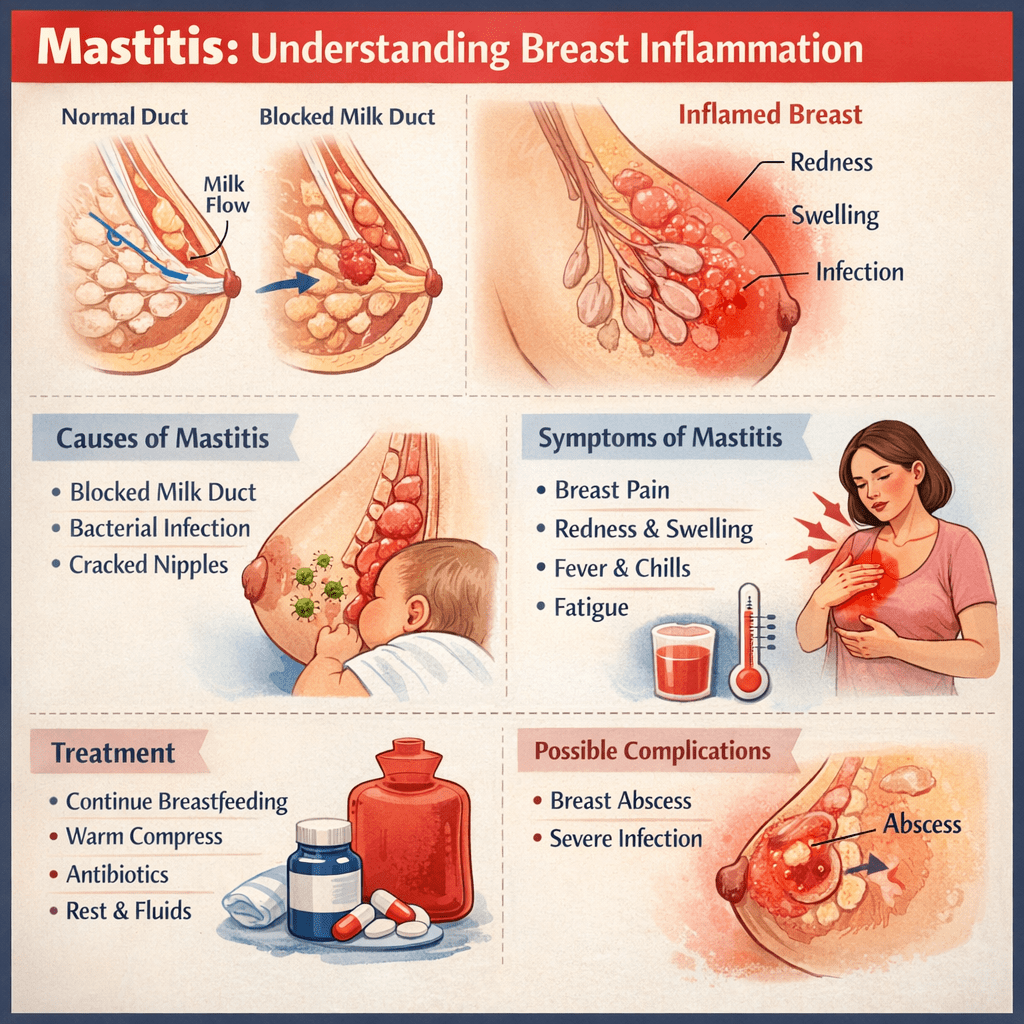
Mastitis is a medical condition characterized by inflammation of the breast tissue. It most commonly affects breastfeeding mothers, particularly within the first few weeks after childbirth, but it can also occur in women who are not breastfeeding and, in rare cases, in men. Understanding mastitis is important for early recognition, proper treatment, and prevention of complications.
What Is Mastitis?
Mastitis occurs when breast tissue becomes inflamed, often due to infection. In breastfeeding women, it usually develops when milk is not properly drained from the breast, leading to milk buildup (known as milk stasis). This trapped milk can create an environment where bacteria grow, causing infection.
Bacteria may enter the breast through cracked or sore nipples. These bacteria commonly come from the skin surface or the baby’s mouth during feeding.
Causes of Mastitis
The most common causes include:
• Incomplete emptying of the breast during feeding
• Skipping breastfeeding sessions
• Poor latch or positioning of the baby
• Blocked milk ducts
• Cracked or damaged nipples
• Tight clothing or bras that restrict milk flow
• Stress and extreme fatigue
Although mastitis is most common in breastfeeding mothers, non-breastfeeding women may develop it due to bacterial infection or blocked ducts.
Symptoms of Mastitis
Mastitis often develops suddenly. Common symptoms include:
• Breast pain or tenderness
• Swelling in part of the breast
• Warmth and redness (sometimes in a wedge-shaped pattern)
• Fever
• Chills
• Body aches
• Feeling tired or flu-like
If left untreated, mastitis can lead to a breast abscess, which is a collection of pus that may require surgical drainage.
Diagnosis and Treatment
Mastitis is usually diagnosed based on symptoms and physical examination. Treatment may include:
• Continuing breastfeeding or expressing milk to relieve blockage
• Warm compresses before feeding
• Cold compresses after feeding to reduce swelling
• Adequate rest and fluid intake
• Pain relievers (as recommended by a healthcare provider)
• Antibiotics if a bacterial infection is confirmed
It is important to continue breastfeeding if possible, as emptying the breast helps speed recovery.
Prevention of Mastitis
Mastitis can often be prevented by:
• Ensuring proper breastfeeding technique
• Allowing the baby to fully empty one breast before switching sides
• Feeding regularly without long gaps
• Avoiding tight-fitting bras
• Maintaining good breast hygiene
• Managing stress and getting adequate rest
Early attention to blocked ducts or nipple soreness can prevent infection from developing.
When to Seek Medical Help
Medical care should be sought if:
• Fever persists beyond 24-48 hours
• Symptoms worsen despite home care
• A painful lump forms
• Pus or unusual discharge appears
Prompt treatment reduces the risk of complications.
Mastitis is a common but treatable condition, especially among breastfeeding mothers. With proper care, hygiene, and early medical attention, most women recover quickly and continue breastfeeding successfully. Education about mastitis helps mothers recognize symptoms early and seek timely support, ensuring both maternal and infant health are protected.


Leave a Reply